|
Hawaii
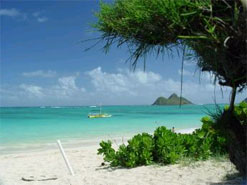
This episode starts with classic Hawaiian images of lush mountains, volcanoes, youngsters surfing the huge waves of Waimea Bay, traditional catamarans surfing and outrigger races.
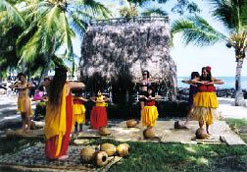
To the sound of Hawaiian slide guitar music and drums, we follow the life of Aloha Keko’olani. She is a cultural practitioner and Univerity of Hawaii scholar of Pacific Studies and tells us about Hawaii’s contradictions between the present and the past. Aloha shows us the plastic version of Hawaiian culture but then introduces us to the ‘true Hawaiians’ who are still coming to terms with the Americanisation of their homeland. Some, as herself, will never let go of their heritage and are showing a renewed interest in their culture.
Aloha speaks of her great great grandfather Solomon Peleioholanis writings, preserving legends that were once only kept as oral history, passed down from grandfather to grandson. Many archaeologists believe that Hawaii was first colonized more than 1,200 years ago by Tahitians. Yet, Aloha believes that the truth lies in the legend of her peace-loving ancestor, Canadian Indian born Chief Nuu and his extended family that arrived in Hawaii about 2,200 years ago. Nuu’s descendants ruled Hawai’i through many invasions by Tahitians and other peoples coming from the South in the 14th century until it was taken over by America in 1893.
A geneticist, Bing Su of Texas University, describes what is seen in the DNA of these people – a rapid population expansion in isolation for nearly 1,500 years from a small group of people 2,200 years ago, exactly as the legends and history says.
Aloha decides to trace her roots and flies to Alaska and Canada where she meets some Tlingit and Haida families. They discuss family lineages and family life. Aloha finds the following cultural similarities with her own people: rubbing noses, use of rugs for payment, stone pounders, stone bowls, war clubs, tattooing tool kit, 2 piece fish hooks, harpoon heads, tiki, totem poles, building design, carvings around building entrances, inlaying of Paua shell, use of Jade, canoe design and the use of calabashes
|