|
Tahiti
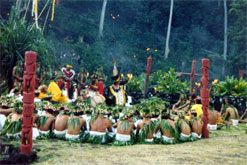
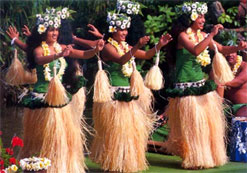
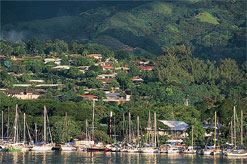
A Tahitian is fishing in a traditional outrigger. He tell us of yesteryear and as the camera focuses on the reflections of mountains in the glassy calm lagoon, a scene from the past unfolds as a flotilla of catamarans in their entire regalia loom into view as they welcome the Aroi dancers sailing in from the island of Raiatea.
On Raiatea island talking to an elder who tells us that Raiatea means ‘sun people white’ and that the pyramid of Maha-ia-tea means “many people white.”
The elder tells us the legend of Con Tiki Viracocha and the ‘Children of the Sun’ arriving from Peru. A re-enactment of Viracocha’s fleet of hundreds of balsa rafts leaves one in awe of the size of the expedition. Con Tiki Viracocha was a direct descendant of the ancestral figure Vira-cocha (Thunder Lake), a man of wisdom and peaceful ways. His descendants, the Uros, live on floating reed beds in Lake Titicaca. Their culture and reed-making techniques are similar to people who live in the swamps on the Tigris and Indus Rivers – people who worship the wise and peaceful ancestral figure Vajrapani (Thunder water). Could a migration from the Persian Gulf to Peru and into the Pacific have influenced this Pacific culture?
In New Zealand, we consult a Chief of the fair skinned Waitaha. He tells a legend about his ancestors leaving India 3,500 years ago after a war with the dark skinned people, how they sailed to Central America and then moved to Peru before their final journey into the Pacific. A geneticist confirms a significant gene pool of 3,500 year old Indian genes in Venezuela
We go to Easter Island, where a member of the Pakomio family take us to view the statues, rock walls and figurines hidden in tiny caves across the island. We take Mr Pakomio to Paracas, Peru, and view the red head mummies. Geneticists compare Pakomio genes with these mummies and explain that Pakomio is part of the ancient Caucasian gene pool often referred to as Berber or Basque blood that stretches from Spain through North Africa to Pakistan and even includes the Welsh and Irish.
We continue on a quest with Mr Pakomio to the home of the blond haired, fair skinned Chachapoya of Peru. Guided by a Shaman we meet in Cuzco, we walk to a giant fortress, once the home of these tall red/blonde haired people called the serpent warriors. We follow the Maori legend to Central America. Here the Cuna of Panama have a script similar to the Rongo Rongo Script. These scripts are compared to the Harappa script and dozens of identical characters are viewed. We notice designs like the Maori Taniwha and compare it to designs from the Tigris area. The women are adorned in saris, coin bibs and jewellery, hinting at a history that goes back to the Indus region.
|